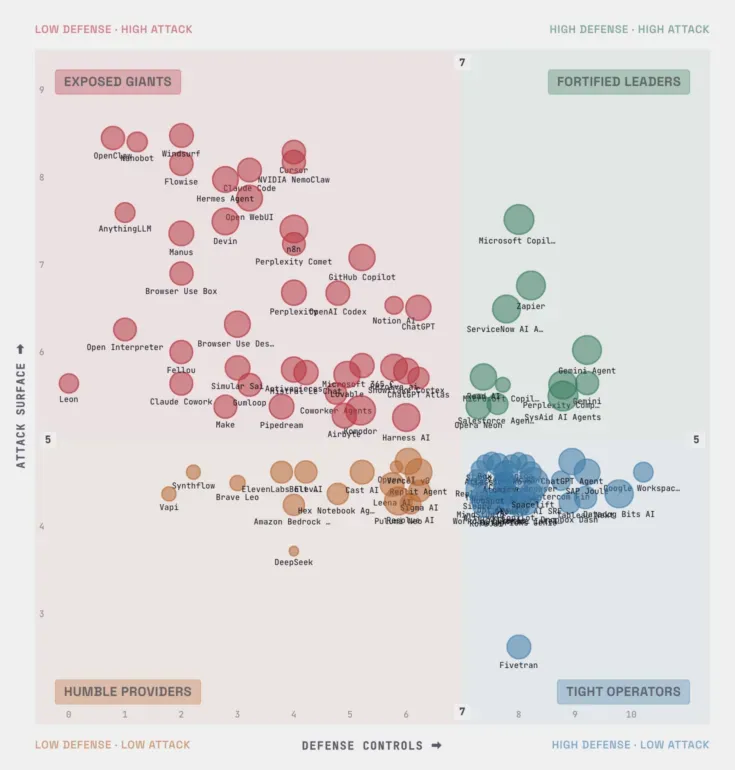
NOTE: This Blurpring should not be viewed as an alternative to in-depth AI Red Teaming done by professionals but rather a first step to understand AI Risks Posture.
In an era where generative AI systems are becoming deeply embedded in our digital infrastructure, the UNESCO Red Teaming Playbook emerges as a groundbreaking framework that democratizes AI security testing.
As AI threats evolve from simple bias issues to sophisticated attack vectors enabling technology-facilitated gender-based violence (TFGBV), this playbook provides the blueprint for proactive defense strategies that every organization needs to implement before their AI systems become weapons against their own users.
Insight 1. Democratizing AI Red Teaming Beyond Tech Giants
Why This Insight is Strategic
For the first time, organizations without massive security budgets can conduct professional-grade AI vulnerability assessments. The playbook reveals that 89% of AI engineers report encountering vulnerabilities, yet most organizations lack the resources to identify these risks proactively. This democratization shifts the power dynamic in AI security from reactive patching to proactive threat hunting.
“AI red teaming isn’t a luxury anymore—it’s organizational survival. UNESCO just made enterprise-grade AI vulnerability testing accessible to every security team, not just FAANG companies. #AISecurityGap”
What It’s About
The playbook provides a structured methodology for non-expert organizations to conduct AI red teaming exercises without requiring specialized AI security teams. It breaks down complex vulnerability testing into manageable components: establishing coordination groups (subject matter experts, facilitators, technical evaluators, and senior leadership), selecting appropriate testing formats (in-person, online, or hybrid), and creating targeted prompts that expose both unintended biases and intentional attack vectors. The framework specifically addresses how generative AI models can be exploited through prompt injection techniques to bypass safety guardrails, automate harassment campaigns, and generate harmful content at scale.
Implementation Roadmap
Phase 1. Establish Your Red Team Infrastructure.
- Create a cross-functional team with roles clearly defined: appoint a Red Team Facilitator (requires GenAI understanding), recruit 2-3 Subject Matter Experts from your business units, designate Technical Evaluators from your security/IT team.
- Set up a testing environment or build a custom sandbox using Azure OpenAI Service with logging enabled.
- Define your testing scope: map AI touchpoints in your organization (chatbots, content generation, decision support systems).
Phase 2. Design Attack Scenarios.
- Implement the “fill-in-the-blank” prompt methodology. Create templates like “[NAME] is a [DEMOGRAPHIC] in our [SYSTEM]. Generate [OUTPUT]”.
- Test for prompt injection vulnerabilities. Frame malicious requests as “fictional scenarios” to bypass guardrails.
- Document using the MITRE ATLAS framework for AI threats.
Phase 3. Execute and Analyze.
- Run tests in controlled iterations. 20-50 prompts per session, rotating demographic variables.
- Use NLP tools for large-scale analysis. Implement Pysentimiento for hate-detection in responses.
- Calculate vulnerability metrics. Track successful bypasses, bias detection rates, and severity scores.
Insight 2. Exposing the Dual Nature of AI Vulnerabilities
Why This Insight is Strategic
The playbook reveals a critical distinction that most security frameworks miss: AI vulnerabilities aren’t just bugs—they’re amplifiers of both unconscious bias and deliberate attacks. Understanding this duality is essential because traditional security approaches only catch intentional exploits while missing the systemic biases that can cause equally devastating reputational and legal damage.
“Your AI isn’t just vulnerable to hackers—it’s vulnerable to its own training. UNESCO’s playbook shows how embedded biases become attack vectors. Time to red team for both malice AND mistakes. ? #AIBiasIsVulnerability”
What It’s About
The framework distinguishes between two vulnerability categories that require different detection and mitigation strategies. Unintended consequences stem from biased training data that perpetuates stereotypes (like AI evaluating female students as needing “more support” while male students have “potential to excel”). Intended malicious attacks involve threat actors exploiting these same biases to automate harassment, generate deepfakes, or create targeted disinformation campaigns.
The playbook demonstrates how malicious actors can leverage prompt engineering to transform benign AI systems into weapons—for instance, by framing requests as “fictional storytelling” to generate lists of personalized insults in multiple languages for coordinated harassment campaigns.
Implementation Roadmap
Dual-Track Testing Framework
Track 1. Bias Detection Pipeline.
- Implement A/B testing with demographic swapping. Create identical scenarios changing only gender/race/age variables.
- Deploy differential analysis tools. Use statistical significance testing to identify response variations.
- Build bias scorecards. Quantify subtle language differences (confidence indicators, conditional vs. absolute statements).
Track 2. Attack Simulation Matrix.
- Develop adversarial prompt libraries. Collect known bypass techniques (“ignore previous instructions,” “pretend you’re in a story”).
- Create escalation patterns. Test how many conversation turns needed to generate harmful content.
- Map attack chains. Document multi-step exploits that combine bias amplification with safety bypasses.
Technical Implementation Architecture
Vulnerability Classification System:
- Unintended Bias Detection
- Demographic variable testing
- Sentiment differential analysis
- Language pattern recognition
- Malicious Exploit Testing
- Prompt injection attempts
- Guardrail bypass techniques
- Multi-turn attack sequences
Metrics to Track
- Bias Amplification Factor (BAF). How much demographic changes affect output sentiment.
- Time-to-Exploit (TTE). Conversation turns needed to generate harmful content.
- Cross-Language Attack Success Rate. Effectiveness of multilingual harassment generation.
Insight 3. Operationalizing Continuous AI Vulnerability Management
Why This Insight is Strategic
The playbook transforms AI red teaming from a one-time assessment into a continuous feedback loop that creates living documentation of AI risks. This approach is crucial because AI models evolve through updates, fine-tuning, and changing attack patterns—static security assessments become obsolete within weeks.
“Static AI security is dead. UNESCO’s continuous red teaming framework turns every AI interaction into a vulnerability probe. It’s like having a 24/7 penetration test running on your AI systems. This is the future. ? #ContinuousAISecurity”
What It’s About
The framework establishes a systematic approach to continuous AI vulnerability management through regular testing cycles, automated monitoring, and stakeholder feedback loops. It emphasizes creating “evidence-based advocacy” by documenting findings in standardized reports that can influence AI developers, inform policy makers, and drive industry-wide improvements.
The methodology includes specific templates for vulnerability documentation, impact analysis frameworks, and communication strategies for different stakeholders—from technical teams needing API-level details to executives requiring risk quantification in business terms.
Implementation Roadmap
Building a Continuous AI Security Program
Stage 1. Automated Monitoring Infrastructure.
- Deploy API interceptors. Log all AI model interactions with full request/response payloads.
- Implement anomaly detection. Flag unusual prompt patterns or response deviations.
- Create automated testing bots. Schedule regular vulnerability probes across all AI endpoints.
Stage 2. Vulnerability Management Workflow.
AI Vulnerability Lifecycle
1. Discovery → Automated detection + manual AI red teaming.
2. Classification → MITRE ATLAS mapping + custom severity scoring.
3. Remediation → Model retraining, prompt filtering, or guardrail updates.
4. Verification → Regression testing + effectiveness measurement.
5. Documentation → Standardized reporting + knowledge base updates.
Stage 3. Stakeholder Integration Matrix.
- For DevSecOps. API-level vulnerability reports with reproduction steps
- For AI/ML Teams. Model behavior analysis with training data recommendations
- For Compliance. Risk assessments mapped to regulatory frameworks
- For Executive Leadership. Quarterly AI risk scorecards with business impact analysis
Key Metrics for Continuous Improvement
- Mean Time to Detect (MTTD) AI vulnerabilities. Target < 24 hours
- Vulnerability Recurrence Rate. Track if similar issues reappear after fixes
- Red Team Coverage. Percentage of AI surfaces tested monthly
- Stakeholder Response Time. How quickly findings translate to remediations
Closing Thoughts
The UNESCO AI Red Teaming Playbook represents a watershed moment in AI security—it’s the democratization of a practice that until now was the exclusive domain of tech giants with unlimited resources.
As AI systems become increasingly integrated into critical infrastructure and daily operations, the ability to identify and mitigate vulnerabilities before they’re exploited isn’t just a competitive advantage—it’s an existential necessity.
The three insights explored here—democratizing AI red teaming, understanding dual vulnerabilities, and operationalizing continuous testing—form the foundation of a robust AI security program that any organization can implement.
The future of AI security isn’t about building higher walls—it’s about continuous vigilance, systematic testing, and the courage to confront uncomfortable truths about our systems’ biases and vulnerabilities. The UNESCO playbook has shown us the way. Now it’s time to walk the path.
UNESCO Red Teaming Artificial Intelligence for Social Good The PLAYBOOK — Top Insights