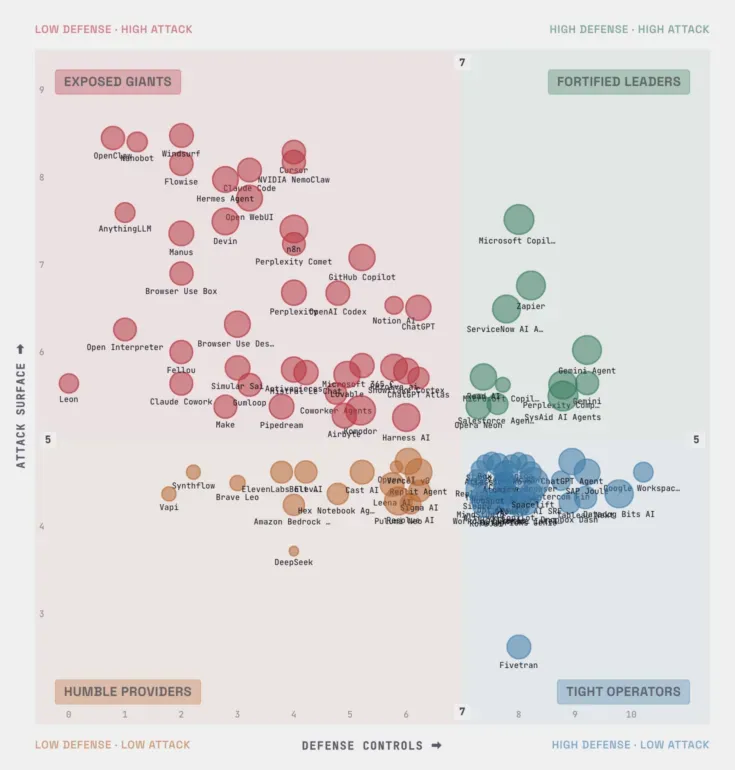
Explore the Top Agentic AI Resources to stay informed about the most pressing risks and defenses in the field. As autonomous agents gain new capabilities—reasoning, memory, tool use—they also introduce unique security challenges. This collection covers the latest research, real-world exploits, and AI red teaming strategies exposing how Agentic AI systems can be manipulated or compromised. From indirect prompt injections to cross-agent coordination issues, and foundational risks like MCP Security, you’ll find insights and guidance to help secure next-gen AI architectures.
Introduction to Agentic AI Security
As agentic AI systems become increasingly autonomous and capable of taking actions on behalf of users, security has emerged as a critical concern for organizations worldwide. These AI agents can interact with multiple systems, process sensitive data, and make consequential decisions—making them attractive targets for attackers. Understanding the evolving threat landscape, vulnerabilities, and defensive strategies is essential for CISOs and security professionals navigating this new frontier of AI-powered automation.
Statistics
| Category | Count | Percentage |
|---|
| Agentic AI Attack | 6 | 31.6% |
| Agentic AI Vulnerability | 3 | 15.8% |
| Agentic AI Defense | 2 | 10.5% |
| Agentic AI Security Research | 2 | 10.5% |
| Agentic AI Threat Model | 2 | 10.5% |
| A CISO’s Guide to Agentic AI | 1 | 5.3% |
| Agentic AI Security 101 | 1 | 5.3% |
| Agentic AI Security Tool | 1 | 5.3% |
| Framework | 1 | 5.3% |
Content
A CISO’s Guide to Agentic AI
This article examines the unique challenges agentic AI presents for chief information security officers tasked with protecting enterprise systems. The analysis highlights gaps between traditional security models and the dynamic, autonomous nature of modern AI agents.
Agentic AI Security 101
SAP’s security team explores the concept of repudiation in the context of agentic AI systems where actions taken by agents may be disputed or denied by users. The article provides foundational concepts for building accountability into agent-based systems through proper threat modeling.
Agentic AI Attack
This research reveals a sophisticated attack technique that creates parallel poisoned web pages specifically targeting AI agents while serving normal content to human users. The stealthy nature of these attacks makes them particularly dangerous as they exploit the unique browsing patterns and behaviors of autonomous AI systems.
ShadowLeak demonstrates a zero-click vulnerability that allows attackers to exfiltrate sensitive data through AI agents without leaving traditional traces. The attack’s stealth characteristics make it exceptionally challenging for existing security monitoring systems to detect and prevent.
This technical analysis details how ShadowLeak exploits ChatGPT’s Deep Research Agent to extract confidential information through service-side vulnerabilities. The attack demonstrates critical weaknesses in how AI agents interact with external services and process untrusted data.
JFrog’s research exposes a novel attack vector that creates an invisible poisoned web layer exclusively visible to AI agents. This parallel web technique enables attackers to manipulate AI behavior while remaining completely hidden from human oversight and traditional security controls.
Security operations centers deploying AI agents face new risks from indirect prompt injection attacks embedded in log files. Trustwave’s analysis shows how adversaries can weaponize seemingly innocuous log entries to manipulate AI-powered security tools and evade detection.
This investigation uncovers vulnerabilities in Notion’s AI agent implementation where the web search functionality can be exploited for unauthorized data exfiltration. The findings highlight risks inherent in granting AI agents broad tool access without sufficient security controls.
Agentic AI Vulnerability
Noma Security’s discovery of ForcedLeak reveals critical vulnerabilities in Salesforce’s AgentForce platform that could allow attackers to extract sensitive enterprise data. The research demonstrates how enterprise AI agent platforms may inadvertently create new attack surfaces through their integration capabilities.
Checkmarx researchers developed a technique called “Lies-In-The-Loop” that systematically defeats common AI agent security controls through carefully crafted deceptive inputs. This vulnerability class shows how adversarial techniques can manipulate agent reasoning and decision-making processes.
This research exposes a novel privilege escalation vector where multiple AI agents can collaboratively bypass security restrictions by coordinating their actions. The attack demonstrates systemic risks in multi-agent environments where isolation between agents is insufficient.
Agentic AI Defense
Palo Alto Networks outlines practical strategies for securing AI agents in production environments while acknowledging the evolving nature of these systems. The article emphasizes the need for adaptive security frameworks that can keep pace with rapidly advancing agent capabilities.
This guide focuses on implementing agentic AI security controls specifically for retail environments where agents handle customer data and transactions. The approach balances enabling AI autonomy with maintaining robust security and privacy protections throughout the customer journey.
Agentic AI Security Research
This academic research proposes a “sentinel agent” architecture designed to monitor and validate the behavior of other AI agents in multi-agent systems. The framework provides a foundation for building trustworthy agentic AI systems with built-in security oversight mechanisms.
Palisade Research presents findings on physical and logical attack vectors targeting AI agent infrastructure and communication channels. The report examines vulnerabilities across the entire agent ecosystem from hardware to application layers.
Agentic AI Threat Model
This comprehensive overview maps the threat landscape for agentic AI systems and proposes architectural patterns for mitigation. The resource provides security professionals with a structured framework for understanding and addressing agent-specific security challenges.
TechTarget’s analysis breaks down the primary security risks associated with autonomous AI agents and provides methodologies for threat assessment. The guide helps organizations systematically evaluate their exposure to agent-related security incidents.
Agent Gateway is an open-source security tool designed to provide centralized monitoring, access control, and security policy enforcement for AI agents. The project offers a practical solution for organizations seeking to implement security guardrails around their agentic AI deployments.
Framework
The A2AS (Agent-to-Agent Security) framework provides a structured approach to evaluating and mitigating security risks in agentic AI systems. This framework addresses the unique challenges of securing communications and interactions between multiple autonomous agents.
For more expert breakdowns, visit our Trusted AI Blog or follow us on LinkedIn to stay up to date with the latest in AI security. Be the first to learn about emerging risks, tools, and defense strategies.
Subscribe for updates
Stay up to date with what is happening! Plus, get a first look at news, noteworthy research, and the worst attacks on AI—delivered right to your inbox.